

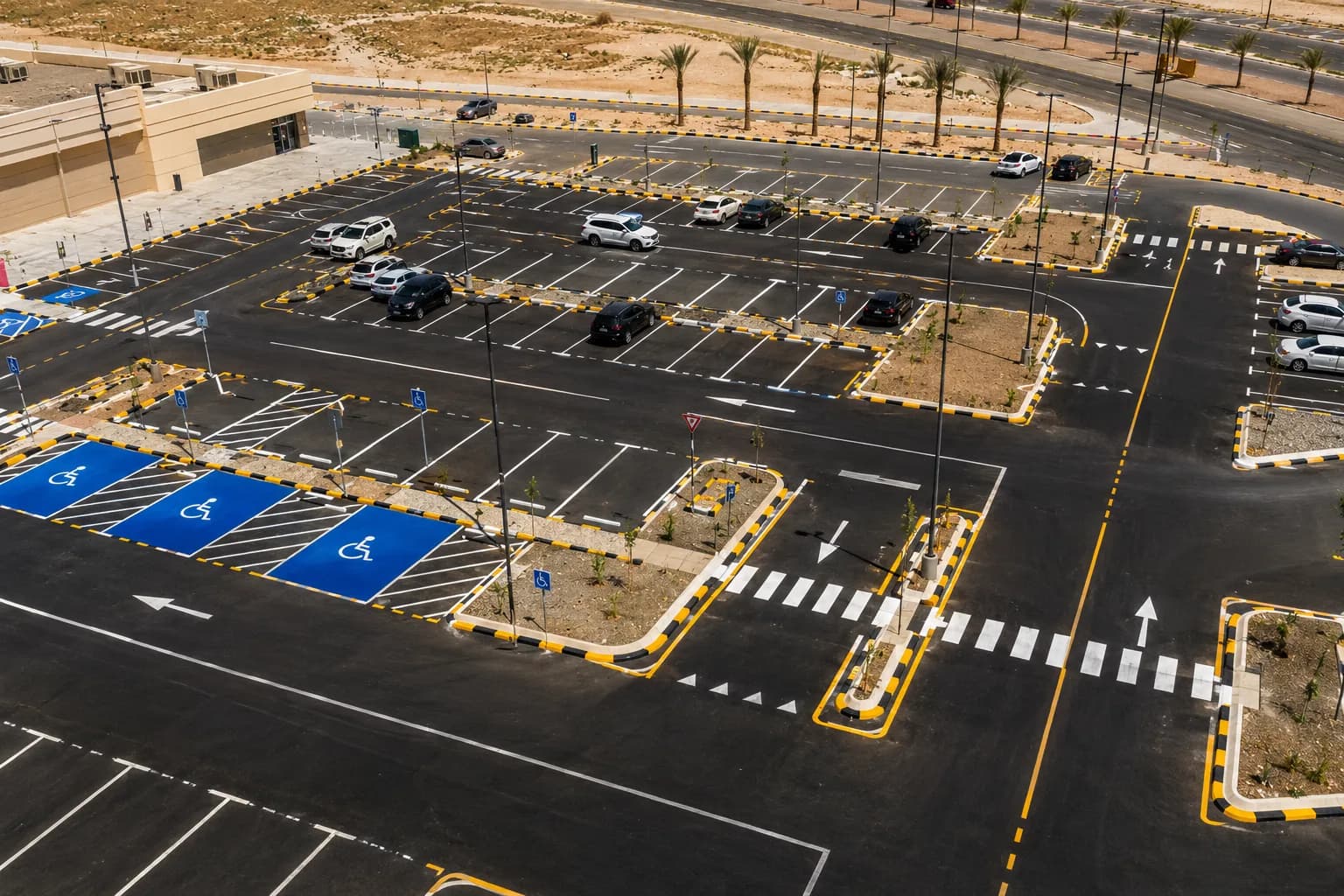
Parking Lot Layout Design Standards: Improving Safety and Traffic Flow
Introduction
A well-designed parking lot is much more than a collection of parking spaces. In commercial, industrial, healthcare, educational, and logistics facilities, parking areas function as active traffic environments where vehicles, pedestrians, delivery trucks, and service equipment operate simultaneously.
An efficient parking lot layout directly affects safety, traffic efficiency, customer experience, and operational performance. Poor planning often results in traffic congestion, vehicle collisions, pedestrian conflicts, and increased maintenance costs.
This comprehensive guide explains the engineering principles and traffic safety standards that help create safer, more efficient parking facilities while supporting long-term operational success.
Why Parking Lot Layout Matters
Parking lots are essentially miniature road networks. Every design decision influences how safely and efficiently vehicles and pedestrians move throughout the facility.
Proper parking lot planning helps:
Improve traffic circulation
Reduce vehicle conflicts
Protect pedestrians
Maximize space utilization
Simplify navigation
Support emergency vehicle access
Reduce maintenance costs
Primary Objectives of Parking Lot Design
An effective parking lot should achieve several key objectives:
Safe vehicle movement
Efficient traffic circulation
Clear driver guidance
Comfortable pedestrian access
Maximum space efficiency
Long-term operational sustainability
1. Traffic Flow Design
Traffic circulation is the backbone of every parking facility.
Well-designed circulation routes should provide:
Clear vehicle paths
Logical entry and exit points
Minimal traffic conflicts
Easy maneuverability
One-Way vs Two-Way Traffic
One-way circulation generally offers:
Better traffic flow
Fewer conflict points
Easier parking maneuvers
Improved safety
Two-way circulation may be appropriate for smaller facilities with lower traffic volumes.
2. Drive Aisle Width
Drive aisles should accommodate:
Passenger vehicles
Delivery vehicles
Emergency services
Maintenance equipment
Narrow aisles often create:
Difficult parking maneuvers
Increased collision risks
Traffic congestion
Driver frustration
3. Parking Space Layout
Parking spaces should be:
Clearly marked
Consistent in size
Easy to access
Highly visible
High-performance pavement markings improve driver compliance and reduce confusion.
4. Pedestrian Safety
Pedestrian movement should always be separated from vehicle circulation whenever possible.
Safe pedestrian facilities include:
Clearly marked crosswalks
Dedicated walkways
Warning signs
Accessible routes
Good visibility at intersections
Protecting pedestrians should be a primary design objective.
5. Entry and Exit Design
Efficient access points reduce congestion and improve traffic safety.
Good design practices include:
Separate entrances and exits
Adequate visibility
Proper directional signage
Smooth turning radii
Sufficient stacking space
6. Traffic Signs
Traffic signs provide immediate guidance and improve driver decision-making.
Typical parking lot signs include:
Entrance
Exit
One Way
Speed Limit
Stop
No Entry
Pedestrian Crossing
Accessible Parking
Reflective materials improve visibility during nighttime operations.
7. Pavement Markings
Pavement markings communicate critical information without distracting drivers.
They typically include:
Directional arrows
Parking stall lines
Stop bars
Crosswalks
Loading zones
Fire lanes
Accessible parking symbols
Routine maintenance ensures markings remain effective throughout their service life.
8. Nighttime Visibility
Parking lots operating after dark require enhanced visibility.
Effective solutions include:
Road studs
Ground reflectors
Reflective traffic signs
Proper lighting systems
Improved nighttime guidance significantly reduces low-speed accidents.
9. Wheel Stops
Wheel stops help:
Protect sidewalks
Prevent vehicle overrun
Organize parking
Reduce property damage
Heavy-duty materials provide longer service life in commercial environments.
10. Speed Management
Low vehicle speeds improve safety for everyone.
Common speed management measures include:
Speed limit signs
Traffic calming devices
Raised pedestrian crossings
Visual narrowing techniques
11. Accessible Parking
Accessible parking spaces should provide:
Convenient access
Barrier-free routes
Proper dimensions
Clear identification
Safe pedestrian connections
Compliance with accessibility requirements improves usability for all visitors.
Common Parking Lot Design Mistakes
Frequent design problems include:
Narrow drive aisles
Poor pavement markings
Insufficient signage
Unsafe pedestrian crossings
Poor nighttime visibility
Low-quality materials
Inadequate drainage
Poor traffic circulation
Avoiding these mistakes significantly improves long-term performance.
Benefits of Professional Traffic Safety Design
Implementing professional parking lot safety solutions helps organizations:
Reduce accidents
Improve operational efficiency
Protect infrastructure
Lower maintenance costs
Enhance customer satisfaction
Improve traffic flow
Increase facility value
Frequently Asked Questions
What is the most important element of parking lot design?
Traffic circulation and clear pavement markings form the foundation of a safe parking facility.
How often should pavement markings be renewed?
Inspection frequency depends on traffic volume and environmental conditions, but periodic maintenance is essential.
Are reflective devices necessary?
Yes. Reflective products significantly improve nighttime visibility and driver guidance.
Why are one-way traffic systems recommended?
One-way circulation reduces conflict points, improves traffic flow, and simplifies vehicle maneuvering.
Conclusion
Effective parking lot design is a combination of engineering, traffic management, and safety planning. Every component—from pavement markings and traffic signs to pedestrian crossings and visibility enhancements—plays an important role in creating a safer environment.
Organizations that invest in professional parking lot planning not only improve safety but also enhance operational efficiency, reduce long-term costs, and provide a better experience for employees, customers, and visitors.
