

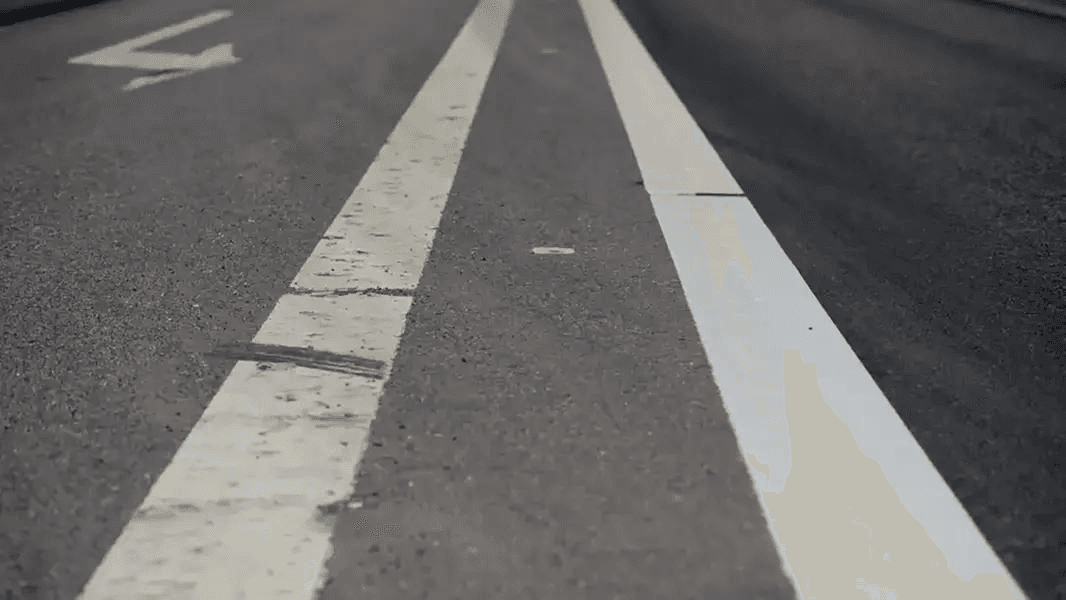
Road marking responsibilities do not end when pavement lines and symbols are installed and accepted. Over time, markings are exposed to continuous tire friction, changing environmental conditions, dust, and surface contamination, all of which can affect their visibility and ability to guide road users.
The purpose of road marking maintenance is to preserve the traffic-control function of pavement markings, rather than simply restore their color or appearance.
A line that remains visible in daylight may gradually lose its ability to reflect vehicle headlights at night. Similarly, directional arrows, stop lines, and pedestrian crossings may deteriorate faster than other markings due to their location and traffic exposure.
This raises an important engineering question: When should pavement markings be repainted, and how can maintenance decisions be based on actual performance rather than material age alone?
Why Do Pavement Markings Require Regular Maintenance?
Pavement markings provide direct visual communication between the roadway and its users. They identify lanes, indicate directions, regulate stopping and crossing movements, and clarify changes in road geometry.
As these markings deteriorate, drivers may find it more difficult to interpret lane boundaries and decision points, particularly during nighttime driving or in complex traffic environments.
Several factors influence marking performance:
Traffic volume: Higher vehicle volumes increase exposure to friction and wear.
Vehicle characteristics: Passenger vehicles, trucks, and heavy equipment impose different operating loads.
Road geometry: Intersections, braking zones, turning areas, and stop lines experience different wear patterns from straight longitudinal markings.
Environmental conditions: Dust, sand, rain, and solar exposure can influence marking condition and performance.
Material and installation quality: Wear resistance, adhesion, and retroreflectivity depend on the selected system, application conditions, and pavement preparation.
Therefore, not all pavement markings should follow an identical maintenance schedule.
When Should Road Markings Be Repainted?
There is no universal repainting interval applicable to every road or infrastructure project.
Maintenance decisions should consider actual marking condition, inspection results, and requirements established by the road authority or project owner.
The following conditions are important indicators of potential maintenance needs.
1. Reduced Daytime Visibility
Loss of contrast between the marking and the pavement surface is an important visual indicator.
When markings become faded, discontinuous, or partially missing, drivers may struggle to identify lane boundaries and traffic directions.
The significance of this deterioration should be assessed in relation to the marking's purpose and location, rather than appearance alone.
2. Declining Nighttime Retroreflectivity
A marking may appear acceptable in daylight while becoming difficult to detect under vehicle headlights.
Retroreflectivity depends on the marking system, including the condition, distribution, and embedment of reflective glass beads.
When measured performance falls below the applicable project requirements, maintenance intervention may be required to restore nighttime guidance.
Visual inspection alone is not sufficient when compliance with a specified retroreflectivity level must be demonstrated. Appropriate measurement equipment and approved testing procedures should be used.
3. Material Wear, Peeling, or Detachment
Pavement markings may require maintenance when inspections identify:
Missing sections of longitudinal lines.
Peeling or separation from the pavement surface.
Edge deterioration affecting required dimensions.
Discontinuous stop lines or pedestrian crossings.
Partial loss of arrows or pavement symbols.
These conditions may result from normal wear, adhesion problems, pavement deterioration, or previous application deficiencies.
Identifying the underlying cause before repainting is essential to preventing repeated failure.
4. Reduced Visibility at Critical Traffic Locations
Not all markings carry the same operational importance.
Deterioration at a busy pedestrian crossing may require a more urgent response than minor wear at a low-traffic location.
Priority locations commonly include:
Intersections and stop lines.
Pedestrian crossings.
Lane-merging and lane-change areas.
Highway entrances and exits.
Curves and critical decision points.
Industrial facilities and entrances with mixed traffic movements.
Maintenance priority should reflect the risks associated with each location and the driver's need for clear guidance.
5. Pavement Rehabilitation or Traffic Layout Changes
Resurfacing, pavement repair, and intersection modifications may require new road markings even when the previous markings were in satisfactory condition.
Before remarking, engineers should review the approved traffic plans to confirm that lane lines, arrows, stop lines, and other symbols remain consistent with the updated roadway arrangement.
Obsolete markings that conflict with the new design should be properly removed using an approved method rather than simply adding new lines.
How Should Pavement Marking Condition Be Inspected?
A professional inspection should consider marking performance, physical condition, and the underlying pavement.
Daytime Visual Inspection
Daytime inspections should assess:
Line continuity and completeness.
Color visibility and contrast.
Edge condition and symbol geometry.
Cracking, peeling, and material detachment.
Surface contamination.
Compliance with approved marking positions, dimensions, and directions.
Nighttime Inspection and Retroreflectivity Measurement
Nighttime visibility is a critical performance consideration for retroreflective pavement markings.
The retroreflected luminance coefficient (RL) is used to evaluate how effectively a marking returns light toward the driver under defined measurement conditions.
Technical guidance from the US Federal Highway Administration (FHWA) emphasizes the importance of systematic retroreflectivity maintenance rather than waiting for markings to disappear completely.
However, US regulatory thresholds do not automatically constitute mandatory requirements in Saudi Arabia. Local requirements, approved project specifications, and the responsible authority must govern compliance decisions.
Pavement Condition and Failure Analysis
Before repainting, engineers should determine whether the problem is caused by material wear, surface contamination, poor adhesion, or underlying pavement damage.
Applying new markings over an unstable or deteriorated surface may result in premature failure.
Is Repainting Sufficient, or Should Existing Markings Be Removed?
The appropriate maintenance treatment depends on material type, existing marking condition, adhesion, and compatibility with the proposed system.
Existing condition | Maintenance action to evaluate |
|---|---|
Contaminated but physically sound markings | Clean and reassess performance |
Limited retroreflectivity deterioration | Inspect the system and identify an approved treatment |
Localized wear | Repair selected sections where permitted |
Peeling or material detachment | Remove unstable material and address the cause |
Extensive deterioration or loss of function | Reapply markings according to approved plans |
Modified traffic layout | Remove conflicting markings and install the revised layout |
Applying a new layer over existing markings should not be an automatic decision.
Excessive material buildup or incompatible layers can create problems involving adhesion, surface consistency, and marking performance.
Maintenance procedures must follow the approved marking system and project requirements.
How Does Marking Material Influence Maintenance Requirements?
Pavement marking service life varies depending on material selection, application quality, traffic exposure, pavement condition, and environmental factors.
Thermoplastic Road Markings
Thermoplastic marking systems are used in many road applications because they can provide durable markings when appropriate materials and installation procedures are selected.
Nevertheless, thermoplastic systems are not maintenance-free.
Retroreflectivity may decline, and localized wear or separation may occur depending on operating conditions.
For a more detailed explanation of material selection, reflective glass beads, and application requirements, see our Road Marking Paint and Thermoplastic Road Marking Guide, which explains the relationship between marking materials and performance.
Conventional Paints and Other Marking Systems
Certain conventional marking paints may suit lower-traffic environments or applications where permitted by project specifications.
Locations with higher operating loads may require evaluation of more durable or specialized systems.
Repainting frequency cannot be reliably determined by material category alone.
Performance requirements, actual service life, and total maintenance costs should guide material selection.
How Can Road Authorities Prioritize Pavement Marking Maintenance?
Effective maintenance management requires a shift from reactive repainting to structured inspection and planned intervention.
A practical program can follow five stages.
First: Establish a Marking Inventory
Record the locations of lane lines, directional arrows, pedestrian crossings, and other pavement markings across the road network or project site.
Second: Classify Critical Locations
Identify maintenance priorities based on operating speeds, traffic volumes, pedestrian activity, conflict points, and site-specific risks.
Third: Inspect and Document Performance
Record visual condition, retroreflectivity measurements when required, inspection dates, and supporting photographic evidence.
Fourth: Select the Appropriate Treatment
Determine whether cleaning, localized repair, removal, or full reapplication is appropriate.
The decision should follow inspection findings and approved project requirements.
Fifth: Verify Completed Maintenance
Inspect completed work to confirm the required performance has been restored.
Successful maintenance is measured by the effectiveness and continued function of the markings, not merely the quantity of paint applied.
Integrating Road Marking Maintenance with Other Traffic Safety Systems
Pavement markings operate alongside traffic signs, road studs, and other traffic management elements.
When an intersection, access road, or industrial site is remarked, engineers should verify that directional arrows, lane boundaries, and stop lines remain consistent with vertical traffic signs and the approved operational layout.
Reflective road studs and other supporting safety products may improve guidance in suitable applications, but they do not eliminate the need to maintain required pavement markings.
For additional context on integrated traffic safety systems, our Road Marking Paint Guide: Types, Specifications and Traffic Safety Applications discusses road marking materials and their relationship with other road safety components.
Road Marking Maintenance in Saudi Arabia
Saudi road infrastructure projects operate under diverse conditions, including high traffic volumes on major corridors, heavy truck movements in logistics and industrial areas, and exposure to high temperatures, dust, and sand.
Maintenance programs should therefore reflect actual operating conditions rather than applying one repainting interval to every road.
Relevant Saudi material standards include:
SASO 929: Hot-applied thermoplastic materials for road markings.
SASO 944: Glass beads for road marking paints.
SASO 2869: Water-based road marking paints.
Material standards should be distinguished from field inspection and maintenance requirements, which depend on the applicable project documents and authority specifications.
Conclusion: Road Remarking Is an Engineering Decision, Not a Fixed Date
Effective road marking maintenance begins with understanding the function of each marking and monitoring its performance under real operating conditions.
The decision to repaint should not be based solely on months or years since installation.
Instead, engineers should evaluate marking visibility, nighttime retroreflectivity, physical wear, pavement adhesion, and the importance of the marking to traffic organization and road safety.
At Safety Triangle Contracting Co., we approach road marking and maintenance as part of an integrated road safety and infrastructure system, connecting appropriate material selection, installation quality, inspection, and long-term operational performance.
The purpose of maintenance is not simply to restore color, but to preserve clear road guidance and safe traffic movement.
Frequently Asked Questions (FAQ)
When should road lines be repainted?
Road lines should be repainted when inspections identify deterioration in visibility, retroreflectivity, or physical condition that requires intervention under applicable project requirements. There is no universal repainting interval.
What are the signs that pavement markings need maintenance?
Common indicators include fading, missing sections, reduced nighttime visibility, peeling, and detachment from the pavement surface. Technical measurements may be needed to confirm performance.
Do thermoplastic road markings require maintenance?
Yes. Although thermoplastic systems can provide durable performance, they may experience wear, reduced retroreflectivity, or adhesion problems depending on operating conditions.
Can new road markings be applied over existing markings?
In some cases, yes, provided the applicable specifications permit it and the existing material is stable and compatible with the new system. Deteriorated or unstable markings may require removal before reapplication.
Is reduced nighttime retroreflectivity a reason to repaint?
Yes, when assessment confirms that retroreflective performance no longer meets the approved requirements. A marking may remain clearly visible during the day while performing poorly at night.
What is the difference between preventive maintenance and complete remarking?
Preventive maintenance uses inspections and targeted interventions to manage deterioration. Complete remarking involves replacing markings across a defined area when localized treatment is insufficient or the traffic layout has changed.
