

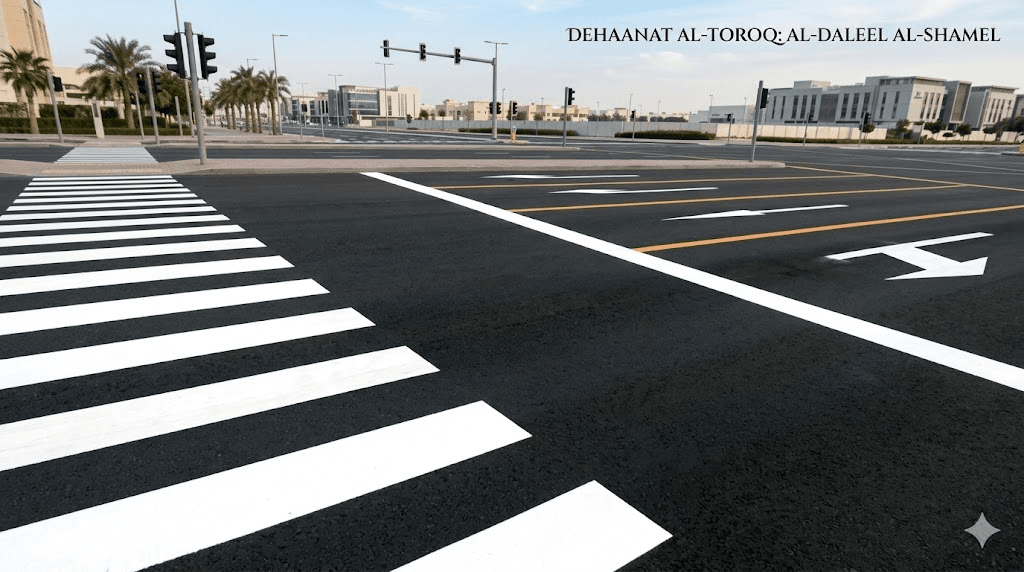
What Is Road Marking Paint?
Road marking paint refers to specialized surface coating materials used to define traffic lanes, pedestrian crossings, and industrial zones. High-quality road marking paint is engineered with advanced performance characteristics such as:
High Retroreflectivity
Skid Resistance
Thermal Stability
Abrasion Resistance
Long-term Color Retention
The effectiveness of road marking paint depends on its chemical composition—typically thermoplastic resins or alkyd binders—combined with reflective glass beads that significantly enhance nighttime visibility.
Types of Road Marking Paint
1️⃣ Thermoplastic Road Marking Paint
Thermoplastic is widely used on highways and major infrastructure projects. It is heated to high temperatures before application, creating a thick, durable layer.
Key Advantages:
Long service life: Lasts several years depending on traffic volume.
High retroreflectivity: Due to the inclusion of 30–40% glass beads.
Rapid drying time: Allows roads to reopen within minutes.
Resilience: Excellent resistance to heavy traffic and harsh weather.
2️⃣ Cold Applied Road Marking Paint
This type does not require heating before application. It is commonly used in parking lots, warehouses, and low-traffic areas. While it is cost-effective and easy to apply, it generally has a shorter lifespan compared to thermoplastic systems.
3️⃣ Alkyd-Based Road Marking Paint
Alkyd-based paint offers a balance between performance and cost. It provides good adhesion and reliable durability for medium-traffic environments.
Technical Note: Proper application usually involves temperatures between 190–200°C for thermoplastic variants to ensure a permanent bond with the substrate.
The Importance of Road Marking Paint in Traffic Safety
Road marking paint plays a critical role in:
Preventing traffic accidents by clearly guiding drivers.
Reducing improper lane changes and clarifying intersections.
Improving driving discipline and overall road efficiency.
Enhancing nighttime safety by reflecting vehicle headlights back toward the driver.
Technical Standards and Performance Requirements
To ensure optimal performance, road marking paint must comply with international standards such as AASHTO M249, EN 1436, or EN 1871. Quality testing typically includes:
Retroreflectivity measurement (RL value).
Luminance and brightness under diffuse illumination.
Skid resistance performance (SRT).
Softening point suitability for hot climates.
Color stability within approved ranges.
Professional Application of Road Marking Paint
Best Practices for Application:
Surface Preparation: Thorough cleaning to remove dust, oil, and debris.
Moisture Control: Ensuring the surface is completely dry.
Accurate Layout: Positioning using professional marking equipment.
Material Prep: Correct heating (for thermoplastics) or mixing (for cold paints).
Thickness Control: Applying at recommended levels to ensure durability.
Bead Broadcasting: Immediately adding glass beads for reflectivity.
Curing: Allowing sufficient drying time before reopening traffic.
Factors Affecting Durability
Factor | Impact on Performance |
Traffic Volume | Higher counts lead to faster mechanical wear. |
Pavement Condition | Asphalt vs. concrete affects adhesion properties. |
Climate | Extreme heat or heavy rainfall impacts chemical stability. |
Quality of Materials | The grade of resins and glass beads determines longevity. |
White vs. Yellow Road Marking Paint
White: Typically used to separate lanes moving in the same direction.
Yellow: Applied to divide opposing traffic flows or indicate caution zones.
Future Trends in Road Marking Technology
The industry is evolving with innovations such as:
Smart Markings: Optimized for autonomous vehicle detection systems.
Eco-Friendly Solutions: Environmentally friendly, low-emission materials.
Enhanced Formulations: Improved wet-night visibility and skid resistance.
Conclusion
Selecting high-performance road marking paint, adhering to international standards, and ensuring professional application are essential for achieving long-lasting results. Investing in quality is a strategic commitment to safer and more efficient road networks.
